July 10, 2026
·
8 min read
Is a Testimonials Landing Page Worth It?
A case study on whether a dedicated testimonials landing page is worth building—decision context, real cost breakdown, benefits that matter, trust and risk considerations, and when to build versus improve what you already have.

You’ve collected solid customer quotes, but they’re scattered across decks, footers, and random pages—so prospects still ask, “Who else have you helped?” A dedicated testimonials landing page seems like an easy win, yet it can also become a low-credibility wall of praise that no one trusts.
This case study helps you decide with clear criteria. You’ll see where visitors actually look for social proof, what objections testimonials can and can’t handle, the real costs to build and maintain the page, and the trust risks that can quietly backfire.
Decision Context
A testimonials landing page matters when your buyer is already interested, but still unsure. “Worth it” usually means it reduces friction in the last mile without adding maintenance debt.
What it is
A testimonials landing page is a single destination that aggregates proof: quotes, review snippets, and short outcomes. It differs from scattered quote blocks, third-party reviews, and full case studies because it’s built for scanning reassurance fast.
If people keep hunting for proof, give them one obvious place to land.
When visitors look
Visitors go looking for social proof when they’re close enough to feel risk.
- After checking pricing and tiers
- Before booking a demo or call
- During checkout or cart review
- While prepping stakeholder approval
- When building a vendor shortlist
If those moments exist in your funnel, a proof hub stops the back-button spiral.
Primary promise
The job isn’t “show off” or “add content for SEO.” The job is to reduce perceived risk by answering one question: “Did someone like me choose this and win?”
When that answer is easy to find, internal debate shrinks and momentum returns.
Common objections
Teams resist testimonials pages for predictable reasons.
- It feels braggy or self-congratulatory
- It seems low-trust or cherry-picked
- It’s hard to keep current
- It could distract from conversion pages
Treat those as design constraints, not blockers, and you’ll build something buyers actually use.
Cost Breakdown
You’re not paying for a page. You’re paying for coordination across writing, design, legal, and analytics.
Here’s the work that usually shows up once you build a testimonials landing page — and why teams often use a dedicated tool like ShowTrust to reduce the coordination drag.
| Work item | What you produce | Who’s involved | Hidden cost |
|---|---|---|---|
| Testimonial sourcing | Candidate list (or a simple request flow) | Sales, CS | Interrupts workflows |
| Permission management | Release approvals | Legal, Ops | Follow-ups linger |
| Editing and shaping | Tight, credible quotes | Marketing | Loses nuance |
| Page design and build | Layout, components (or embeddable widgets) | Design, Web | Design debt grows |
| Tracking and QA | Events, proof checks | Analytics, QA | Ongoing maintenance |
If you can’t name the owner for each row, the page will quietly stall — and the more you can standardize collection, curation, and publishing, the less this becomes a recurring cross-team project. For guardrails as you standardize, reference the FTC’s guidance on endorsements, influencers, and reviews.
Benefits That Matter
Trust acceleration
A testimonials landing page compresses your proof into one place, so buyers stop hunting for reassurance. That matters most when the purchase feels risky, like a new vendor or a pricey contract.
Imagine a buyer who likes your demo but fears being the first to bet. A concentrated wall of specific outcomes, roles, and contexts lowers that “unknown” tax fast.
The real win is speed. You shorten the time between interest and belief—and that lift compounds as part of a broader conversion rate optimization strategy.
Objection handling
Testimonials work best when they answer the objection before it becomes an email thread. Put proof next to the doubts your buyers already carry.
- Reliability in real-world use
- Support quality under pressure
- Onboarding time and effort
- ROI skepticism and payback
- Switching risk and disruption
Treat each objection like a FAQ with human receipts. That’s how you prevent “circle back next quarter.”
Sales enablement
A single testimonials URL gives reps a clean asset they can reuse without rewriting the pitch. It fits naturally into follow-ups, stakeholder forwards, and those “can you prove it?” procurement moments.
Reps can send it after a call, drop it into a champion’s internal email, or link it in a mutual action plan. It also helps when the buyer’s team changes mid-cycle.
Make it easy to forward. That’s how proof travels inside accounts.
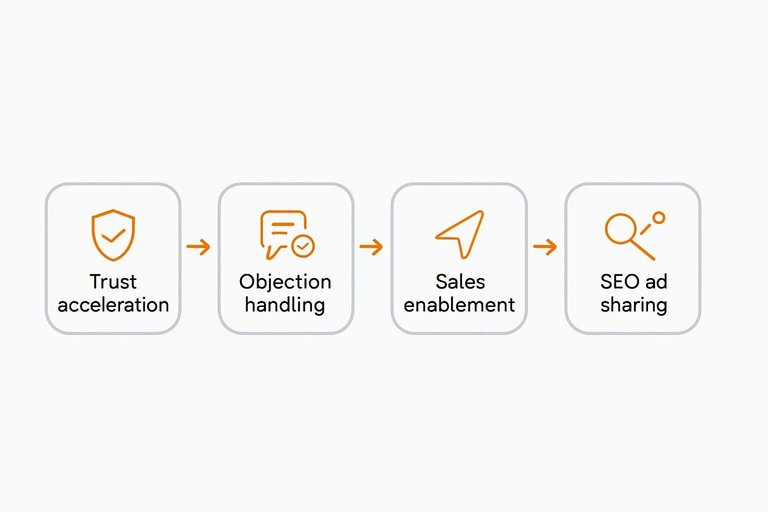
SEO and sharing
A testimonials page can pull weight outside the sales cycle too. It shows up when people search for reassurance, not just features.
- Captures branded proof searches
- Ranks for “reviews” modifiers
- Answers niche use-case queries
- Earns links from mentions
- Shares cleanly on social
If prospects search for validation, your page should be the result they find.
Trust and Risk
A testimonials landing page can build trust fast, but it can also trigger skepticism fast. The difference is whether your proof reduces perceived risk or reads like marketing copy. If you’re unsure what qualifies as strong proof, it helps to ground the page in clear social proof principles instead of slogans.
Authenticity signals
Real testimonials feel anchored to a real person and a real moment. You’re giving the reader enough detail to believe it happened.
- Full name and role
- Company name and headshot
- Specific scenario and context
- Verifiable link or profile
- Balanced wording, not hype
If you can’t verify it, you’re asking for faith, not trust.
Compliance concerns
Testimonials are marketing assets, so treat them like regulated content even when you’re not regulated. Get explicit permission, document the original text, and track any edits you make.
Disclose incentives when you offered them, even if they seem minor. If you’re in a regulated industry, confirm what you can claim and how you can present outcomes.
Build a lightweight review flow with legal, brand, and product so nothing “helpful” becomes a liability.
Failure modes
Most testimonial pages fail the same way: they try to impress instead of reassure. Readers notice the manipulation cues.
- Generic praise with no specifics
- Outdated logos or roles
- Mismatched audience and use case
- Cherry-picked only perfection
- Broken links or dead profiles
When it feels curated, it stops being proof and starts being persuasion.
Reputation edge cases
Negative reviews aren’t always a threat; they can be contrast. Address themes openly on the page or link to a transparent review source, then show what you changed.
Don’t mention competitors by name unless you can do it fairly and consistently. If your testimonials sound “too good,” add context, constraints, and who it’s not for.
Credibility often comes from what you’re willing to admit, not what you’re trying to prove.
Build vs Improve
You can win trust without adding a new page, and sometimes that’s the smarter trade. Choose the move that fits your traffic source, buyer intent, and proof you actually have.
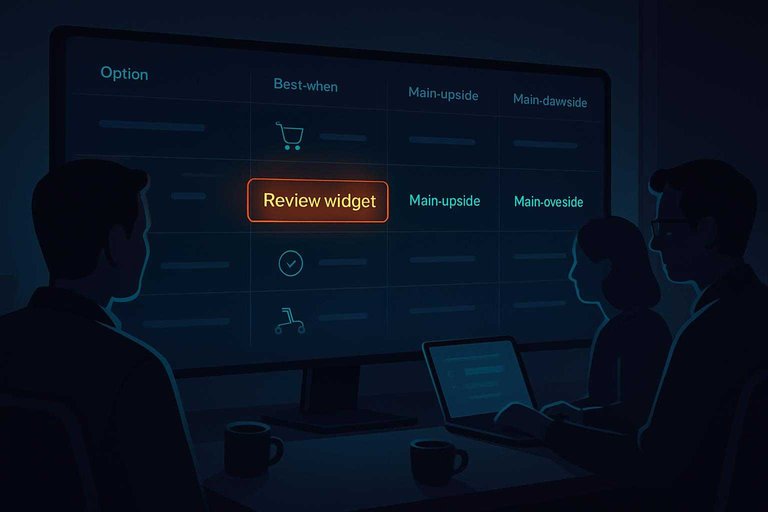
A quick way to compare options is by where the proof lives and what it supports.
| Option | Best when | Main upside | Main downside |
|---|---|---|---|
| Dedicated testimonials page | Social proof is deep | Proof in one place | Extra click required |
| Testimonials on key pages | Intent is high | Trust at decision | Harder to maintain |
| Case studies page | Stories have detail | Shows process | Higher effort content |
| Review widget on checkout | Purchase risk is high | Reduces hesitation | Can feel spammy |
| Proof blocks in ads/email | Traffic is cold | Pre-qualifies early | Limited context |
If you need trust in the moment of choice, improve the pages you already send people to—especially using proven patterns from these testimonial page examples.
Real-World Example
Imagine a B2B services team with happy customers, but no single place to point people. Proof lived in email threads, slide decks, and random screenshots. Sales kept pinging marketing for “something credible,” and prospects kept asking for references again and again.
Starting situation
Testimonials existed, but they were scattered and inconsistent. Sales asked marketing for proof mid-call, then waited, then improvised. Prospects requested references repeatedly because nothing felt current or comparable to their situation.
What they built
They built one page that answered, “Who like you has succeeded with us?”
- Categorized quotes by use case
- Industry filters for quick matching
- Short video clips for nuance
- Review snippets for breadth
- Proof badges and CTA blocks
Once it existed, sales stopped hunting and started linking.
Workflow created
They needed a repeatable process, not a one-time cleanup.
- Request a testimonial right after a clear win.
- Get written permission and usage scope.
- Edit for clarity without changing meaning.
- Route to internal and customer approval.
- Publish, then refresh quarterly and retire stale items.
If upkeep feels heavy, your intake is the real bottleneck.
Lessons learned
The surprise was the maintenance load, not the build. Generic praise sounded nice, but specific context did the selling. Alignment mattered too, because marketing wanted polish and sales wanted speed.
Reps used it like a menu: pick the closest match, paste the link, and move on. Build for retrieval, not admiration.
Decide, Ship, and Keep It Credible
- Make the decision based on intent: if prospects frequently ask for proof, compare vendors, or need internal buy-in, a testimonials landing page is usually worth testing.
- Ship a credible v1: use named, specific quotes tied to outcomes and use cases, add light structure (by persona/problem), and link each proof point to a relevant product or case study page.
- Protect trust: include authenticity signals (company, role, permission), avoid over-editing, and set rules for industries where compliance and endorsements are sensitive.
- Maintain it like a sales asset: assign an owner, refresh quarterly, retire outdated quotes, and feed the best snippets into proposals, onboarding, and shareable links.
Turn Feedback Into Conversions
If a testimonials landing page feels worth it but time-intensive to build and maintain, the real bottleneck is collecting, curating, and publishing proof consistently.
ShowTrust helps you request testimonials, approve the best ones, and publish them as a public wall or embeddable widgets—so prospects can verify trust fast and you can improve conversion rates.
Written by
ShowTrust
Notes from the ShowTrust team on collecting testimonials and building authentic social proof.
Share: